Tile roof repair
Tile roof repair: the tile isn't what fails
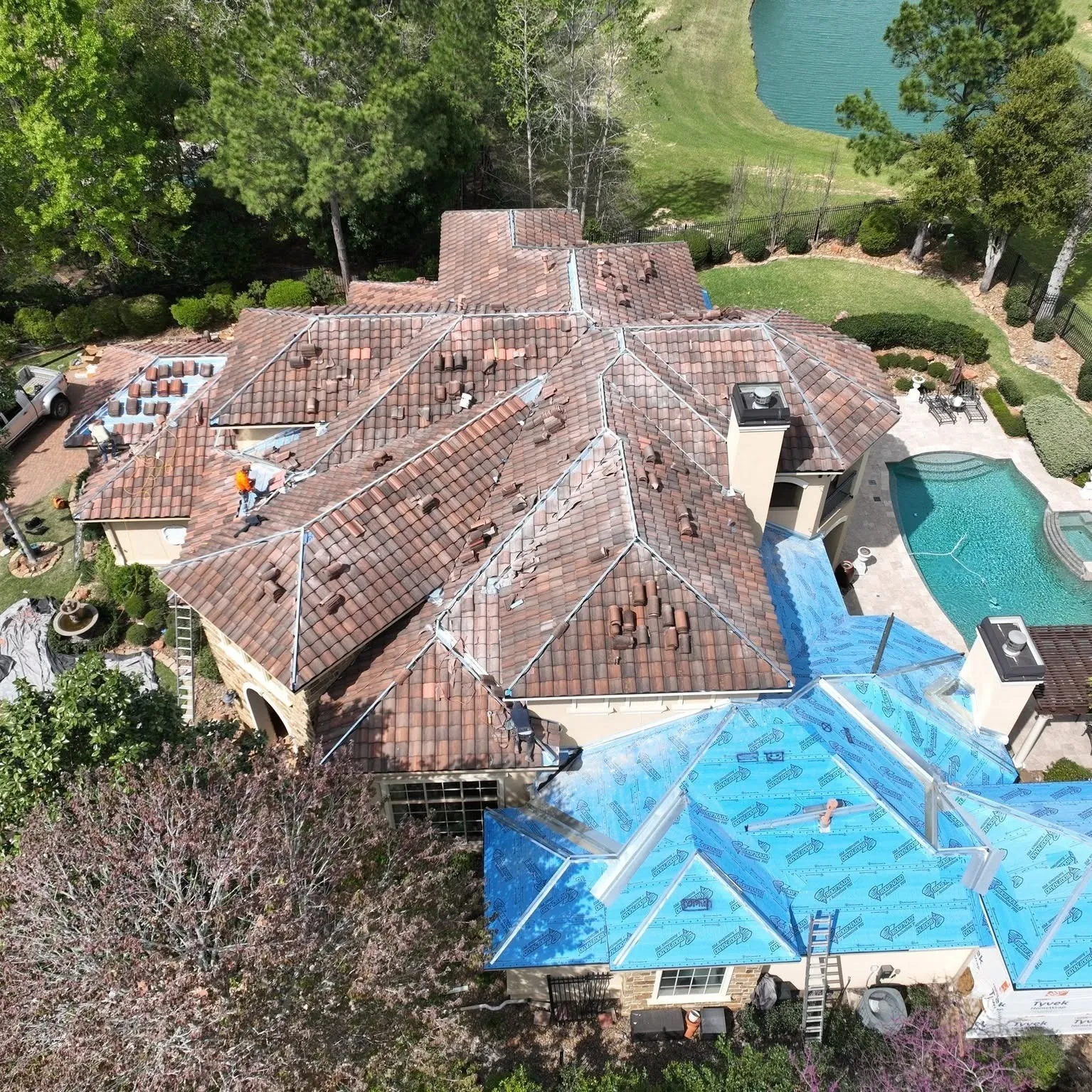
The tile isn't what fails. What's underneath it fails. We take off the tiles that are still in good shape, fix the stucco and the flashing all the way around the roof and up the sidewalls, go down to the deck and fix what needs fixing, put down a high-temp peel-and-stick underlayment, and put the same tile back on.

Why a tile roof leaks when the tile looks fine
The underlayment under the tile is what actually keeps the water out, and the flashing where the roof meets the walls is where it gets in. Tile is only as good as the system it sits on. That means getting into the system, not just looking at it.
Can a leaking tile roof be repaired instead of replaced?
Usually, yes. The tile isn't what fails. The system underneath it fails: the underlayment, and the flashing where the roof meets the walls. We take the tile off, rebuild that system, and put the same tile back on. Same tile, same look, with a completely rebuilt system underneath.
Book my Roof Health Inspection
Where does a tile roof leak?
Where two systems meet. The roof-to-wall lines, where the tile roof runs into the stucco, are the most critical transition points on any roof. When a leak has been chased for years and nobody has found the source, the answer is usually there: flashing that was never done right, or a missing kickout at the wall.
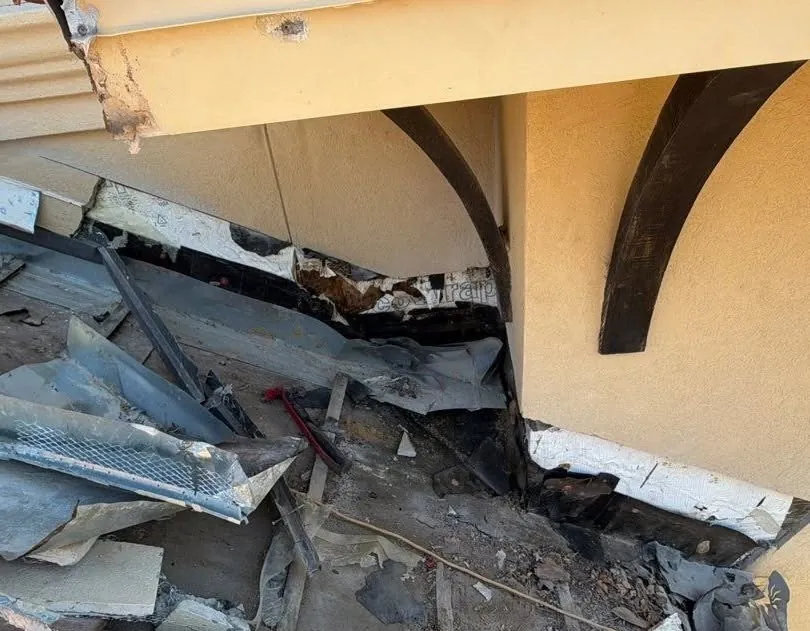
A tile roof doesn't get step flashing. The flashing at the walls has to run behind the stucco, so getting to it means cutting the stucco open. That's why a leak at the wall can't be fixed from the top of the tile.
How we rebuild the system under your tile
Here's the order it happens in, on every tile roof we reset.
- The tile comes off carefully, one section at a time, so as few tiles break as possible. The good tile gets stacked and saved.
- The stucco is cut open at every place the roof meets a wall.
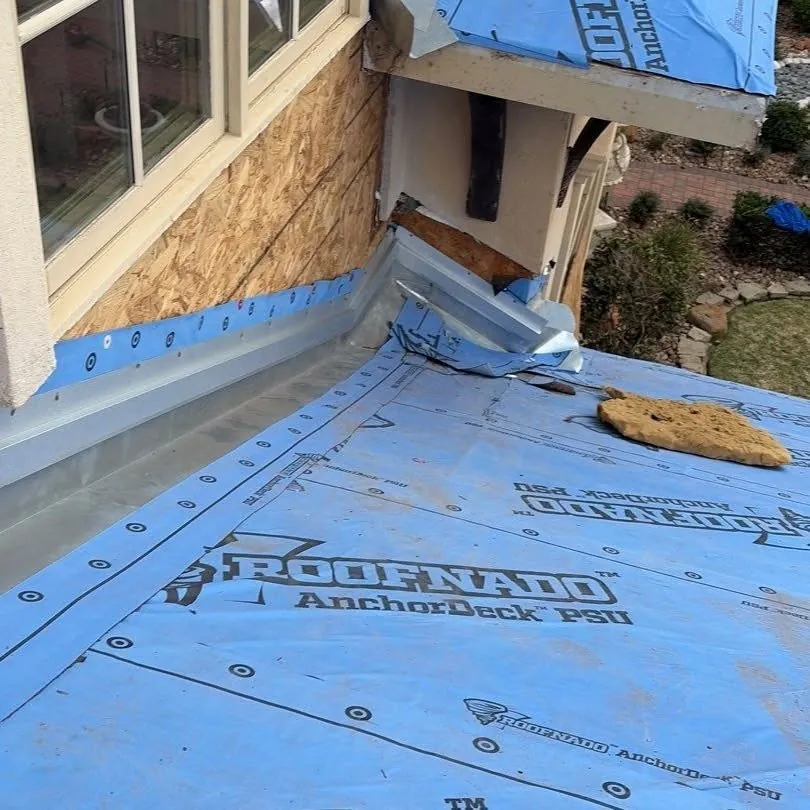
- New flashing goes in all the way around the roof and up the sidewalls, installed behind the stucco, with kickouts where the roof edge meets a wall. A tile roof doesn't get step flashing. The stucco doesn't get closed until the flashing is photographed.
- We go down to the deck and fix every area that needs it.
- A high-temp peel-and-stick underlayment system goes down. Not standard underlayment. It's a thicker, heavy-duty underlayment, built for the heat from the sun on the tile and the attic below it.
- Hips and ridges go on metal hat channels, never wood, on every tile roof we do. Wood and prolonged moisture have one relationship: rot. Metal is the better product.
- The same tile goes back on. Same tile. Same look. A completely rebuilt system underneath.
We work section by section, so no part of your roof is left half-built overnight. If a heavier premium underlayment is an option on your roof, it shows on your estimate as a labeled upgrade, priced at the difference.
How many tiles break during a detach and reset?
Some will. On concrete tile, plan on about 20 percent breakage. The tile comes off carefully, one section at a time, to keep that number down. The breakage allowance is written into your estimate before we start, and anything past it is priced per tile ahead of time and approved by you first.
Do I have to replace my tile roof if the tile is discontinued?
No. Discontinued doesn't mean gone. Before any work starts, we check whether your tile is still made. If it isn't, we search the tile boneyards (yards that keep salvaged tile) for enough of it, or find a newer tile made to take its place, so your roof still matches.
It's more work. Sourcing takes time, persistence and knowing where to look. It's how your roof keeps its look.
Does repairing a tile roof cost less than replacing it?
Yes. You keep the most expensive material on the roof, the tile, and you're not buying a whole new roof system. How much less depends on how big the roof is, how complex it is and what's found underneath. Your estimate shows every line in writing before you decide.
Every tile roof is its own job, so there's no one price. [BRIAN: how much less a tile detach and reset runs than a new tile roof. An earlier draft said 'at least 40 to 50 percent less'; no source file carries that number, so it is held until Brian confirms it]
Book my Roof Health Inspection
What to ask any roofer about a tile repair, including us
- Where is the water actually getting in, and can you show me the photo?
- Will the wall flashing go behind the stucco, with kickouts at the ends?
- What underlayment goes down under my tile?
- Will the hips and ridges sit on wood or on metal?
- How much breakage is planned, and what happens if my tile is discontinued?
What happens after the reset?
You get the photos: the stucco opened, the new flashing before it's closed, the underlayment down and the tile back on. Your workmanship warranty is lifetime, in writing. If it's truly a workmanship issue, we fix it, no questions. Read the warranty.
What happens when you book?
We call to confirm the time and who's coming. The visit takes about an hour. We photograph the roof, the walls where the roof meets them, the attic and everything at the roofline, then bring your roof system down to you: the good, the bad and what's failing. You decide from there.
Book my Roof Health Inspection Call (832) 356-4876
Shingle roof instead? Start with Roof Repair. We repair roofs across Conroe, The Woodlands, Spring and Montgomery County.
Questions homeowners ask
Can a leaking tile roof be repaired instead of replaced?
Usually, yes. The tile isn't what fails. The system underneath it fails: the underlayment, and the flashing where the roof meets the walls. We take the tile off, rebuild that system, and put the same tile back on. Same tile, same look, with a completely rebuilt system underneath.
Where does a tile roof leak?
Where two systems meet. The roof-to-wall lines, where the tile roof runs into the stucco, are the most critical transition points on any roof. When a leak has been chased for years and nobody has found the source, the answer is usually there: flashing that was never done right, or a missing kickout at the wall.
How many tiles break during a detach and reset?
Some will. On concrete tile, plan on about 20 percent breakage. The tile comes off carefully, one section at a time, to keep that number down. The breakage allowance is written into your estimate before we start, and anything past it is priced per tile ahead of time and approved by you first.
Do I have to replace my tile roof if the tile is discontinued?
No. Discontinued doesn't mean gone. Before any work starts, we check whether your tile is still made. If it isn't, we search the tile boneyards (yards that keep salvaged tile) for enough of it, or find a newer tile made to take its place, so your roof still matches.
Does repairing a tile roof cost less than replacing it?
Yes. You keep the most expensive material on the roof, the tile, and you're not buying a whole new roof system. How much less depends on how big the roof is, how complex it is and what's found underneath. Your estimate shows every line in writing before you decide.
My tile roof is leaking but the tiles look fine. What's wrong?
It's almost never the tile. It's the system underneath: the underlayment and the flashing where the roof meets the walls. The tile can be in good shape while the layer under it has failed.
Do I need all new tile?
Usually not. The tiles that are still in good shape come off carefully, we rebuild what's underneath, and the same tiles go back on. Same tile, same look.
What gets fixed under the tile?
We go down to the deck and fix every area that needs it, reflash every place the roof meets a wall with kickouts at the ends, put the hips and ridges on metal hat channels, and lay a high-temp peel-and-stick underlayment, not standard underlayment, before the tile goes back.
Will my roof be left open overnight?
No. We work one section at a time, so nothing is left half-built overnight and every section is dried in before we leave it.
See what your roof is telling you before you decide anything.
- Book a roof inspection.
- We bring your roof system down to you. The good, the bad, what's failing, in photos.
- You decide.